
Home for Life: The Smart Buyer’s Guide to Aging in Place with Comfort and Confidence

For many older adults, the idea of aging in place — remaining in one’s home safely and comfortably through all life stages — has become an important goal. Whether you’re moving to be closer to family or downsizing after retirement, the right home can make independence and comfort last for decades.
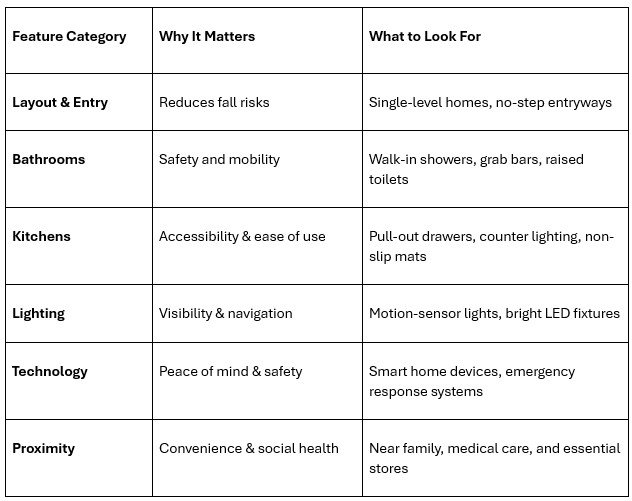
When searching for a home to age in place, prioritize single-level living, step-free entries, wider doorways, accessible bathrooms, non-slip flooring, good lighting, and modern safety technology. Don’t forget energy-efficient systems, nearby healthcare access, and a layout that supports both mobility and community connection.
Key Home Features for Aging in Place
Frequently Asked Questions
What’s more important — location or layout?
Both. Location ensures proximity to healthcare and family; layout determines daily comfort and safety.
Are aging-in-place renovations expensive?
Not always. Simple upgrades like grab bars, lever-style handles, and better lighting can dramatically improve safety without major renovation.
Should I consider a home with smart technology?
Yes. Smart thermostats, lighting, and video doorbells make life easier and safer while helping you monitor your environment.
Essential Features for Aging in Place
Use this list during home tours or inspections:
● No-step entry and wide hallways (at least 36 inches)
● Main-level bedroom, bathroom, and laundry room
● Non-slip flooring in kitchens and bathrooms
● Lever handles instead of round doorknobs
● Good natural and artificial lighting
● Walk-in shower with seat and handheld showerhead
● Accessible storage (pull-down shelves, lazy susans)
● Low-maintenance landscaping and exterior materials
● Energy-efficient HVAC and water systems
● Emergency alert system or fall detection device
How to Evaluate a Potential Home
Walk the entryway – Can you access it without stairs?
Check the bathrooms – Are grab bars and seating options possible?
Test the kitchen layout – Can you reach everything without strain?
Look for lighting consistency – Any dark spots in hallways?
Assess future adaptability – Could a ramp, chair lift, or wider doorway be added later?
The right home for aging in place isn’t just about square footage — it’s about freedom. By choosing a space designed for safety, accessibility, and modern convenience, older adults can enjoy their independence longer and with less stress. Building the future starts with one thoughtful decision: find a home that grows with you.
By: Lucille Rosetti