
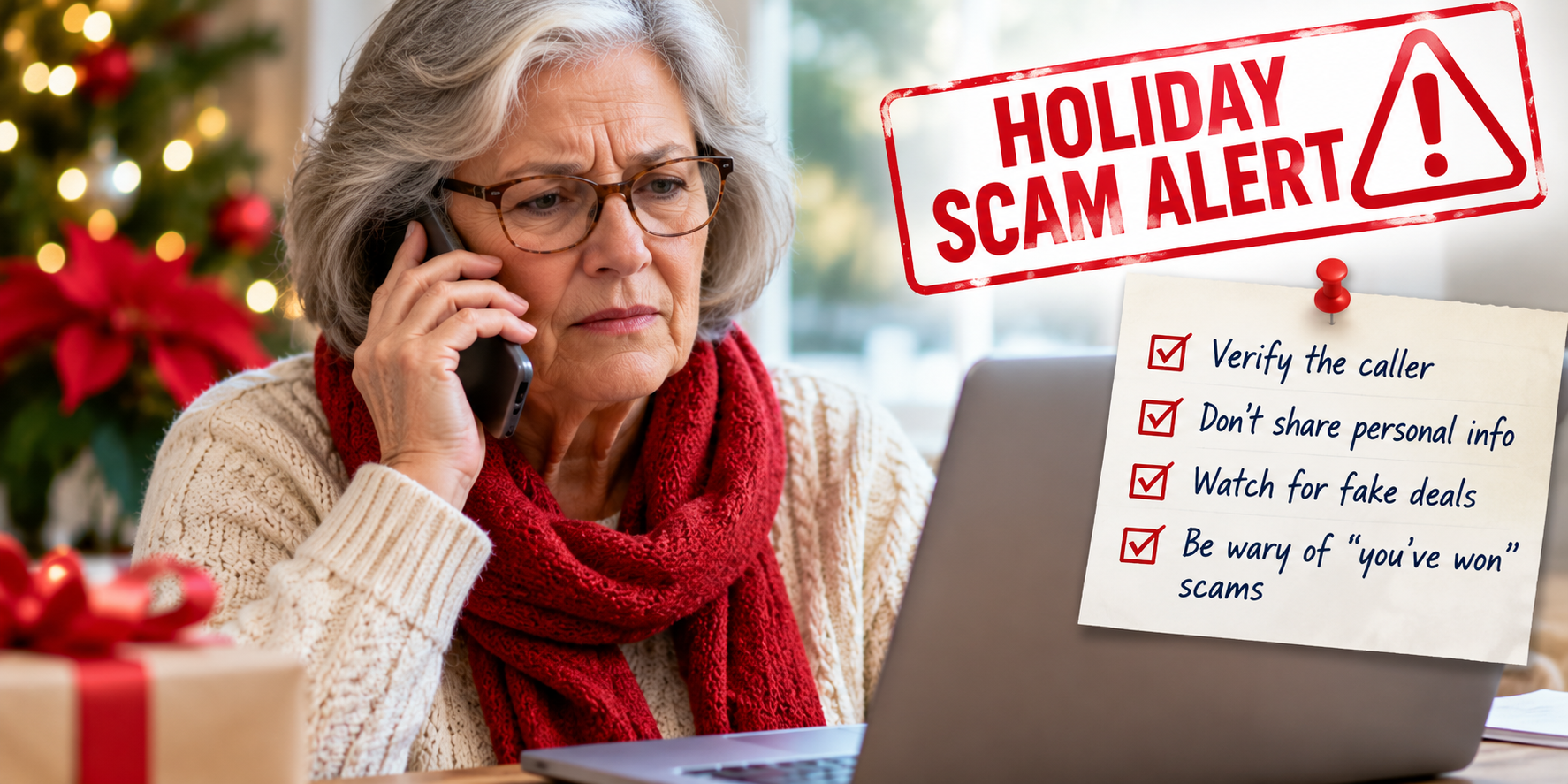
Financial fraud occurs every 15 seconds. Sadly, the most targeted group is seniors. How targeted, you ask? In 2024, individuals aged 60 and older suffered nearly $5 billion in losses from senior scams. This is a 43% increase in losses from the year before. What’s worse is that we are coming up on the busiest and most profitable season for elder fraud, as scammers use festive phone calls, fake charities, online bargains, lottery scams, and more to turn up the pressure during the winter holidays. The result is millions of vulnerable older adults—thousands in the Dallas-Fort Worth area alone and often needing Dallas elder care support —being at risk of serious financial loss. You may hear this as a family member or caregiver and think, “What can be done about it? How can we reduce the risk these senior scams are causing?”
Awareness is the first line of defense. Understanding how elder fraud happens—including the warning signs—can make all the difference in protecting elderly loved ones. Secondly, support programs, tools, education, and other resources like those at The Senior Source’s Elder Financial Safety Center are available to provide caregiver protection tips so that everyone recognizes the signs of elder fraud and protects themselves from crafty senior scams.
In 2024, individuals aged 60 and older suffered nearly $5 billion in losses from senior scams. This is a 43% increase in losses from the year before.
Could You Recognize These Holiday Senior Scams and Elder Fraud Tactics?
Scammers representing well-known companies or local charities
Package delivery scams that use fake notices and malicious links
Unsolicited calls or emails claiming you’ve won something (for example lottery or Christmas shopping spree)
Fake online stores offering steep discounts on popular gifts. Once payment is made, the site vanishes.
Victims are told they’ve won something but must “pay taxes or fees” upfront with a gift card
A caller or email asks for private information (account numbers, passwords, PINs, etc.)
An email about an error processing an online purchase you didn’t make
Impostors threaten to shut off electricity or gas right before the holidays
Fake church or community outreach calls
Calls claiming to be from the FBI or IRS
Senior Scams and Elder Fraud Tactics Are Craftier and Scarier During the Holidays
Older adults are far more likely to lose thousands of dollars each year to fraudsters who exploit their trust. And the frustrating part is that these scams can range from a phone call about winning a Christmas shopping spree to tactics far more sophisticated than most of us could ever imagine.
Take, for example, an elderly couple living in a Dallas neighborhood. They received a call last year from someone claiming to represent a well-known energy provider. The caller offered to lower their electricity rate if they switched companies and promised access to a free, government-sponsored home improvement program for seniors. The deal supposedly covered major upgrades like roofing and window replacements — all at no cost.
All they needed was a $30,000 bank loan, which the energy provider would cover, and to provide their account information. They were also offered $750 for every friend referral who also jumped in on the deal for their property.
Sounds convincing enough, right? Well, it got worse. The couple was warned that the representative they met with was committing fraud and keeping the funds. The representative denied it, but they saw $240 being withdrawn from their bank account monthly for “paperwork purposes.” What began as a $30,000 home improvement opportunity ballooned into a $100,000 debt. Most of the promised work wasn’t completed, their friends were also defrauded, and the entire ordeal turned out to be part of an intricate, predatory lending and fraud scheme.
Why does this keep happening? Simply put, scammers believe older adults are an easy target.
Top Five Reasons Scammers Target Older Adults
1. A trusting mindset
Older adults are more inclined to believe that the person on the other end of the line or the person who sent them an email is, in fact, their banker, the IRS, the FBI, their energy provider, etc. They are also less likely to hang up, and the longer they listen, the more convincing the person becomes.
2. More financially stable
The story above proves scammers don’t care if you have money or not. That said, many senior adults are more likely than younger adults to have money in their savings accounts, pensions, retirement accounts, property, etc., that they can pull from. Therefore, they are a more attractive target.
3. Limited online experience
A common belief is that seniors aren’t as versed in online or phone security. Add in their trusting mindset, and they’re more apt to provide sensitive information, such as bank account details or their signature, for certain documents. They may also click on malicious links.
4. Cognitive decline as we age
As people age, some experience memory issues and reduced decision-making abilities, making them more susceptible to confusion or manipulation. Many of these same individuals live alone and may not have someone they trust by their side during key decisions. As a result, they are easy targets for elder fraud.
5. Reluctance to involve family members
Many older adults want to feel as independent as possible, as long as possible. If they fall victim to senior scams and elder fraud, they may be hesitant to report to authorities or tell family members because they are embarrassed, prideful, or concerned that their family will think they cannot manage their finances. This gives the initial scammer an incredible amount of power.
Senior Scams and Elder Fraud: How Caregivers and Family Members Can Protect Their Loved Ones
Protecting older adults from senior scams and elder fraud takes a mix of education, oversight, and empathy.
Here’s what you can do:
Look for warning signs — A few warning signs have already been mentioned earlier in this article. That said, also look for unexplained bank withdrawals or wire transfers, mail or email from unfamiliar companies, and your senior loved one’s sudden reluctance to discuss financial matters or new anxiety toward money and unpaid bills.
Stay involved early and often — Regularly check in on your senior’s finances and digital habits, and don’t be afraid to ask questions or have a simple conversation if you are concerned about something. Having that conversation now can head off potential problems before they spiral out of control.
Use real-life examples as teaching tools — If you’re a caregiver of an older adult it’s important to be aware of the more common holiday scams running rampant right now and how they are impacting real people. Pay attention to these stories in the media and, more importantly, talk about them with your loved one. As they see and hear about senior scams and elder fraud—especially the more sophisticated ones—you increase the likelihood that they won’t be duped.
Offer to oversee bank accounts — Talk to your loved one about appointing a trusted family member to help manage accounts and financial decisions. This could be you, but it could also be someone in the family, or even a caregiver they trust to help them make the best decisions.
Focus on strong passwords — If you’re a caregiver, one of the best things you can do is help your elderly loved one set up secure, unique passwords for their online accounts. Another strong strategy is to work with their bank to create text and email alerts for unusual activity. This goes for bank accounts and all credit cards.
Ensure your loved one knows that they are still in control — Many senior adults feel like they are losing independence when they must double-check with someone before acting. Ease their concerns by letting them know when it comes to crafty scammers everyone needs help, regardless of age, and that it’s OK to check with someone they trust if they are skeptical of unsolicited calls, emails, or texts.
Secure important documents — Help them securely store important financial and personal records in places that scammers can’t access. Shred any sensitive information before throwing it away.
Senior scams and elder fraud are becoming more sophisticated, but awareness and prevention can go a long way. As a family member and/or caregiver, your vigilance is often the difference between a scammer’s success and a senior’s safety. By staying informed, watching for red flags, and keeping communication open, you can help your loved one enjoy the holidays—without worry or risk.
Frauds & Scams, Resource Center, Resources: Frauds & Scams / By The Senior Source
Image created by ChatGPT for Choice Connections